Metal Roofing FAQs
The most common questions we hear about metal roofing in the Inland Northwest — snow loads, fire protection, HOA rules, cost, lifespan, and more.
Talk to Brandon direct(208) 217-0272Get Your Free
Roof Estimate
No pressure, no spam. Licensed & insured — Idaho RCE-66885.
Common questions.
How does a metal roof handle heavy snow loads?
Metal roofing's smooth surface sheds snow in controlled sheets before it reaches critical loads. Standing seam panels allow snow to release evenly, protecting your roof structure, gutters, and anyone below. For areas with 40-80+ inches of annual snowfall, this prevents thousands of dollars in structural damage over the roof's life.
Is metal roofing fire resistant?
Metal roofing carries a Class A fire rating — the highest available. It is completely non-combustible and won't catch fire from airborne embers, radiant heat, or direct flame contact. Many insurance carriers in Idaho, Montana, and Washington offer premium discounts of 10-15% for homes with metal roofs.
How much can a metal roof save on energy costs?
Metal roofing's reflective surface can reduce cooling costs by up to 25% compared to conventional asphalt. In winter, standing seam systems create an uninterrupted air channel that helps maintain consistent indoor temperatures and reduces heating costs year-round.
How long does a metal roof last?
A standing seam metal roof lasts 50-70 years with virtually zero maintenance, compared to 15-20 years for asphalt shingles in the Inland Northwest. One metal roof costs less than three asphalt roofs over the same period and eliminates the disruption of re-roofing projects.
Does a metal roof increase home value?
Metal roofing recoups 85-95% of its cost at resale — one of the highest ROI home improvements available. In the competitive North Idaho and Western Montana real estate markets, a standing seam metal roof signals that the property has been built or maintained to the highest standards.
Is metal roofing environmentally friendly?
Most metal roofing contains 25-95% recycled content and is 100% recyclable at end of life. Asphalt shingles contribute 11 million tons to landfills annually in the US. Metal roofing's longer lifespan means fewer raw materials consumed over time, and its energy efficiency reduces your carbon footprint every month.
Lakeside & Valley
questions.
How does a metal roof handle heavy snow near Lake Pend Oreille?
Metal roofs are engineered to shed heavy, wet lake-effect snow efficiently. Standing seam panels allow snow to slide off in controlled sheets rather than accumulating dangerous loads. Combined with proper snow guards, a metal roof prevents the ice dam formation that is common on lakeside properties during Idaho winters.
Will a metal roof prevent ice dams?
Yes, metal roofing is one of the most effective solutions for ice dam prevention. The smooth, low-friction surface allows snow to shed before it can melt and refreeze at the eaves. Standing seam systems with no exposed fasteners eliminate the penetration points where ice typically works under shingles and causes leaks.
How long does a metal roof last in Idaho lake country?
A properly installed standing seam metal roof will last 50 years or more in Idaho's lakeside and valley environments. Unlike asphalt shingles that crack and curl from the extreme temperature swings near the lake, metal panels expand and contract without compromising their weathertight seal.
Does a metal roof increase home value on waterfront property?
Absolutely. Studies show metal roofing can increase home resale value by 1-6%, and the effect is even more pronounced on waterfront properties where curb appeal and durability are premium selling points. Buyers in lake communities specifically look for homes with long-lasting, low-maintenance roofing that matches the property investment.
What metal roof style looks best on a lakefront home?
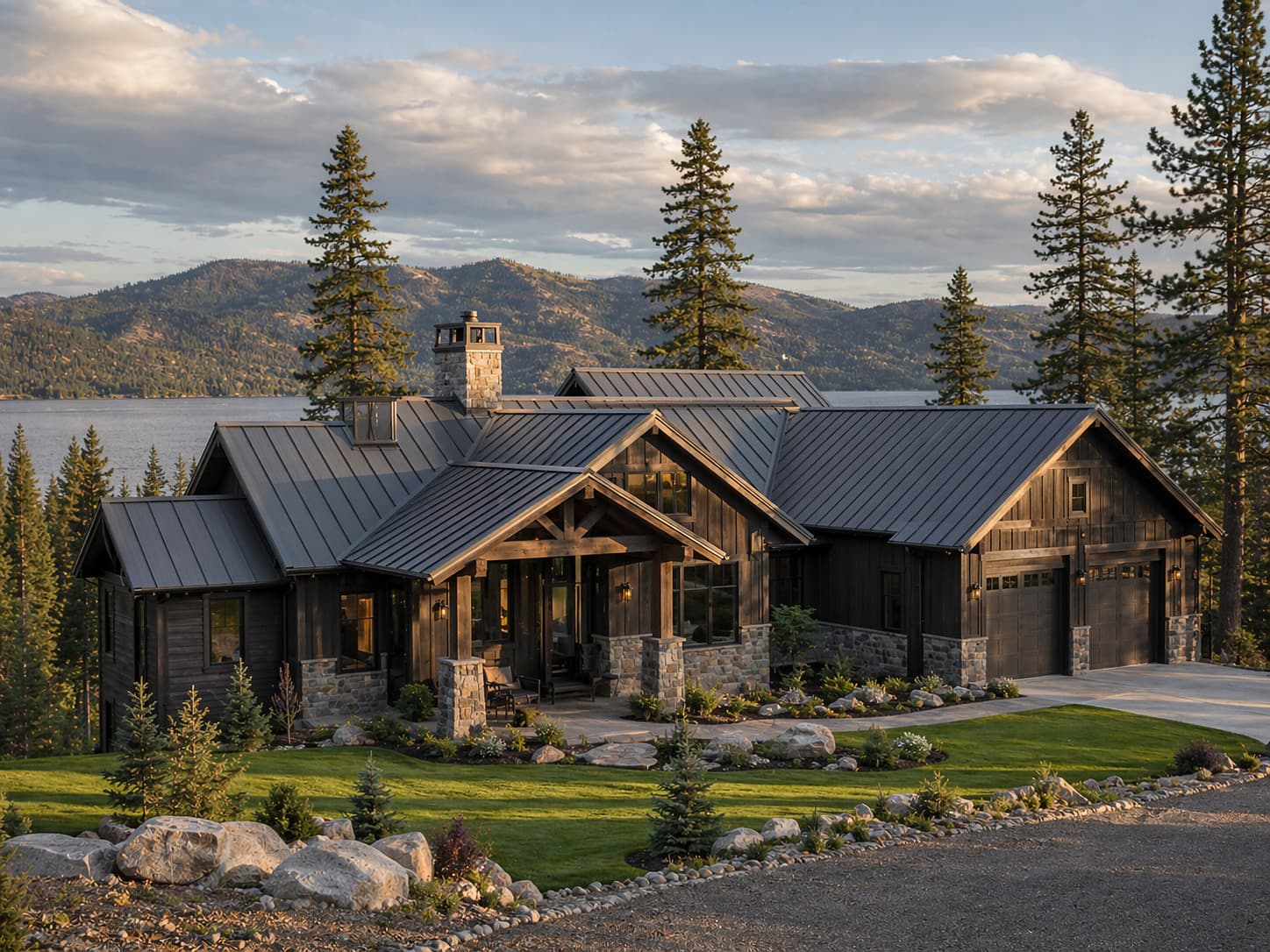
Standing seam metal roofing in darker tones like charcoal, weathered bronze, or forest green is the most popular choice for lakefront homes in North Idaho. These profiles deliver a clean, modern aesthetic that complements mountain and waterfront architecture while providing superior performance against moisture and snow loads.
Mountain & Timber
questions.
Is a metal roof fire-resistant?
Metal roofing carries a Class A fire rating, the highest available. It is completely non-combustible, meaning airborne embers from a wildfire cannot ignite your roof. This is critical in mountain and timber communities where a single ember can travel a quarter mile and ignite a cedar shake roof.
Can a metal roof handle steep mountain pitches?
Yes, standing seam metal roofing is specifically engineered for steep-pitch installations common on mountain homes. The concealed-fastener clip system allows panels to expand and contract freely while maintaining a weathertight seal, even on roof pitches of 12:12 or steeper.
Will my insurance go down with a metal roof in a wildfire zone?
Many insurance carriers offer significant premium discounts for homes with Class A fire-rated metal roofing in wildfire interface zones. Some homeowners report savings of 15-30% on their annual premiums. In areas where insurers are dropping coverage entirely for combustible roofs, a metal roof may be required to maintain coverage.
How does a metal roof perform in extreme cold?
Metal roofing is ideal for extreme cold environments. Standing seam panels are designed to expand and contract with temperature fluctuations without cracking or compromising their seal. The interlocking panel system prevents wind-driven snow infiltration, and the smooth surface sheds snow loads efficiently to prevent dangerous accumulation.
How much does a metal roof cost compared to asphalt in mountain areas?
While a metal roof costs 2-3 times more upfront than asphalt shingles, it lasts 3-4 times longer. In mountain environments where asphalt shingles typically fail in 12-15 years due to extreme conditions, a 50-year metal roof eliminates multiple expensive re-roofing projects and the difficulty of getting crews to remote mountain properties.
Prairie & Urban
questions.
Can a metal roof withstand hailstorms in the Inland Northwest?
Yes, metal roofing is one of the most hail-resistant roofing materials available. Steel panels can withstand impacts from hailstones up to 2 inches in diameter without damage. While a single hailstorm can total an asphalt roof, a metal roof shrugs off the same storm with zero damage and no insurance claims.
Are there metal roof options that meet HOA requirements?
Absolutely. Modern metal shingle profiles replicate the look of cedar shake, slate, or architectural asphalt shingles so closely that most HOAs approve them without issue. These profiles deliver the traditional aesthetic your neighborhood requires while providing the 50-year durability and fire resistance that shingles simply cannot match.
How much can a metal roof reduce energy costs?
Metal roofing with reflective coatings can reduce summer cooling costs by up to 25% by reflecting solar heat away from your home. In winter, the superior insulation compatibility of standing seam systems helps reduce heating costs. Homeowners in the Spokane and Coeur d'Alene area typically see a noticeable reduction in their annual energy bills.
Is a metal roof noisy in rain?
No. Modern metal roofs installed over solid decking with proper underlayment are no louder than any other roofing material during rain. The solid roof deck, synthetic underlayment, and attic insulation absorb sound so effectively that most homeowners report no noticeable difference from their previous asphalt shingle roof.
How does a metal roof handle high winds on the prairie?
Standing seam metal roofing is rated for wind speeds of 110-150 mph, far exceeding the wind resistance of asphalt shingles. The interlocking panel design and concealed-fastener system prevent wind uplift that commonly peels back shingles during the sustained wind events common across the Inland Northwest prairie corridor.
High Valley
questions.
What's the best roofing material for Montana winters?
Standing seam metal roofing is the gold standard for Montana's harsh winters. It sheds heavy snow loads efficiently, resists ice dam formation, and handles the extreme temperature swings from subzero nights to sunny winter days without cracking or warping. The same panel systems are trusted on ski resort lodges across the Northern Rockies.
How does a metal roof handle 60+ inches of snow?
Metal roofs are specifically engineered for high snow load environments. Standing seam panels allow snow to slide off in controlled sheets, preventing dangerous accumulation. Proper snow guard placement ensures snow sheds safely rather than avalanching. The structural clip system distributes loads evenly across the roof deck.
Do metal roofs qualify for Fire-Smart community programs?
Yes. Metal roofing with a Class A fire rating is actively encouraged by Fire-Smart community programs in Whitefish, Columbia Falls, Kalispell, and surrounding areas. Installing a non-combustible metal roof is one of the most impactful steps in wildfire mitigation, and many insurance carriers offer premium discounts for Fire-Smart compliant roofing.
What's the ROI on a metal roof for a mountain home?
For premium mountain homes in the Flathead and Missoula valleys, a metal roof delivers exceptional ROI. The 50-year lifespan eliminates two or three re-roofing cycles you would face with asphalt. Add in lower insurance premiums, reduced maintenance costs, and a 1-6% increase in resale value, and a metal roof typically pays for itself within 15-20 years.
Can a metal roof match the look of a luxury mountain home?
Absolutely. Standing seam metal roofing is the preferred choice for high-end mountain architecture throughout Montana's Flathead Valley. Available in premium finishes like weathered copper, matte black, and aged bronze, metal roofing delivers a sophisticated aesthetic that complements timber frame, log, and contemporary mountain home designs.
River & Rural
questions.
Can I get a metal roof on my barn and house in one project?
Yes, and that is one of the biggest advantages of working with us. We handle dual-use projects — residential and agricultural buildings on the same property — with a single crew and a single timeline. Volume material pricing on multi-structure projects makes the whole job more affordable than contracting each building separately.
How does metal roofing compare to traditional shingles for agricultural buildings?
For agricultural buildings, metal roofing outperforms shingles in every category. A metal roof on a pole barn or equipment shed lasts 40-50 years with virtually zero maintenance, while shingles typically fail in 15-20 years. Metal is also more resistant to wind uplift, hail damage, and moisture penetration — critical factors for buildings that protect valuable equipment and livestock.
What maintenance does a metal roof need in rural areas?
Metal roofing requires almost no maintenance in rural environments. An annual visual inspection and occasional debris removal from valleys or gutters is all that is needed. There are no shingles to blow off, no granules to lose, and no moss or algae to treat. This near-zero maintenance is especially valuable for rural properties where contractor service calls are expensive and difficult to schedule.
How long will a metal roof last on a pole barn?
A properly installed metal roof on a pole barn will last 40-50 years with minimal maintenance. Galvalume and painted steel panels resist corrosion, UV degradation, and the ground-level moisture common in agricultural settings. Many pole barn metal roofs installed 30-40 years ago are still performing well with no signs of needing replacement.
Is a metal roof worth the cost for a rural property?
For rural properties, a metal roof is one of the best investments you can make. The 40-50 year lifespan eliminates the need for costly re-roofing on buildings that are often difficult for crews to access. When you factor in zero maintenance, no emergency repair calls, and volume pricing for multiple structures, the total cost of ownership is significantly lower than asphalt over the life of the roof.
Still have questions?
Give us a call — a Metal Roof Idaho team member will answer every question with no pressure to buy.
Tell us about
your roof.
Five fields, two minutes. Our crew responds within 24 hours with an honest assessment — no high-pressure sales, no bait-and-switch pricing.